The Beginning - Notes App and Quiet Pages
Jayeza did not begin as a book. It began as survival. My poetry lived in the Notes app of my phone, squeezed between random thoughts and daily reminders. Some lines found refuge in the back pages of an old diary. They were never arranged, never curated. I wrote when emotions overflowed without thinking about structure, audience, or publication. They were just fragments of who I was at different moments in time.
The Spark - Watching Parizaad
Then came Parizaad. There was something unforgettable about a boy who carefully preserved his poetry in a notebook, dreaming of publishing it one day. His words mattered to him, even if the world didn’t see them yet. Watching him felt personal. I realized I was doing the same thing writing, but not honoring the writing. His unfulfilled dream unsettled me. I didn’t want my poems to remain scattered memories. That was the turning point. I began collecting every piece I had written, not casually, but intentionally.
The Choice - Writing in Roman Script
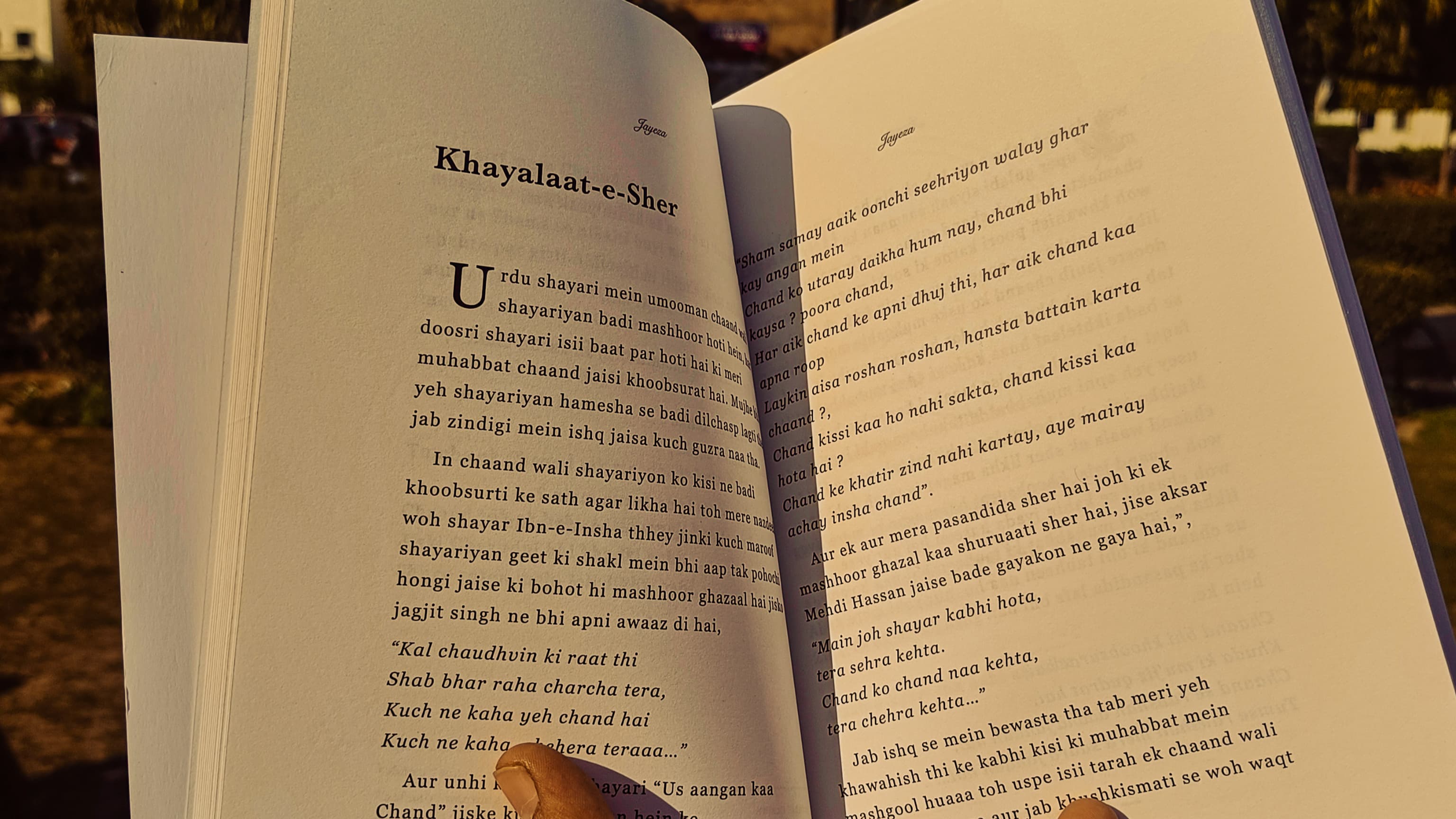
As the compilation began, I had to decide who this book was truly for. I chose Roman Urdu deliberately. Many people understand Urdu deeply but struggle to read its traditional script. My generation reads Urdu in captions, chats, and DMs. I didn’t want language to become a barrier. I wanted the emotions to be accessible especially for Gen Z and for those who feel Urdu but cannot read Nastaliq fluently. This decision shaped the identity of Jayeza.
The Structure - Less but Meaningful
Instead of filling the book with dozens of poems, I selected only twenty. Each one had to carry weight. I wanted space between emotions, not noise. Jayeza is not meant to overwhelm the reader; it is meant to slow them down. Every poem represents a phase, a reflection, a quiet self-assessment which is what the title itself suggests.
The Difference - Story Before Sher
What truly makes Jayeza different is the storytelling woven into it. With each poem, I added a two to three page narrative. Not an explanation, not a breakdown of metaphors but a story that builds the emotional landscape behind the poem. Even someone who claims they “don’t understand poetry” can enter through these stories. By the time the verses appear, the reader is already immersed in the feeling. It becomes less about decoding and more about experiencing.
The Outcome - From Fragments to Form
Jayeza is not just a poetry collection. It is a reflection of growth a journey from scattered midnight thoughts to a bound book. It is proof that what once lived quietly in a Notes app can transform into something tangible, something shared. What began as private emotion became a structured expression and perhaps, an invitation for others to gather their own scattered words and give them a spine.